
Sheffield Greyhound Going Report: How Track Conditions Affect Owlerton Races
Best Greyhound Betting Sites – Bet on Greyhounds in 2026
 Available in US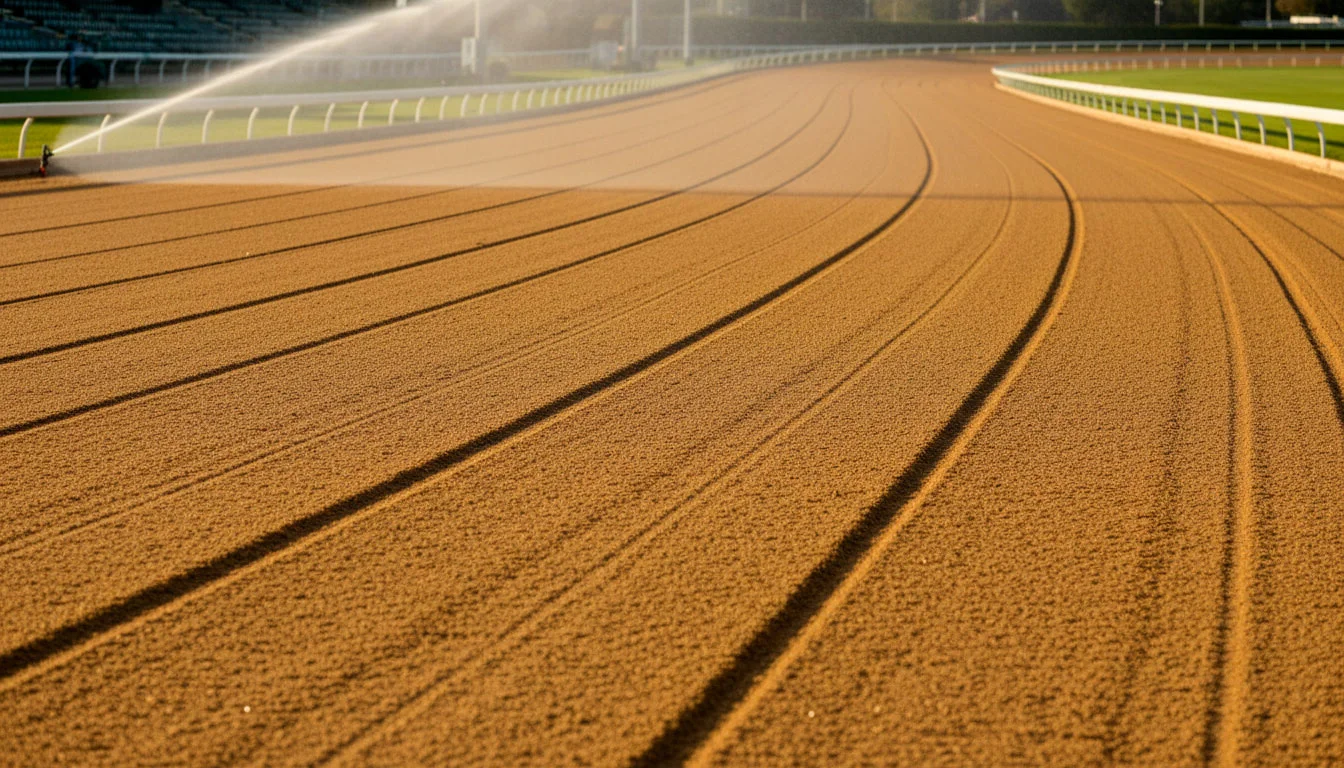
The Sheffield going report describes the condition of the racing surface at Owlerton Stadium on any given day, and it influences race outcomes in ways that many punters underestimate. Greyhound tracks in Britain use sand-based surfaces rather than grass, which means the going does not follow the same vocabulary as horse racing — there is no “good to firm” or “heavy” in the traditional sense. But the surface does change. Rain makes it wetter and slower. Frost hardens it. Summer heat dries it out. Each of these conditions shifts the balance of advantage between different types of dogs, and accounting for the going is a necessary part of any serious handicapping approach at Sheffield.
The Sheffield going report is rarely the single decisive factor in a race. But it is one of several variables that, when combined with form, trap draw and distance, can tip a close call in the right direction. Ignoring it means ignoring information that is freely available and directly relevant to the outcome.
Sheffield Greyhound Going Report — More on this topic at sheffield greyhound results.
How Sand Track Surfaces Work in UK Greyhound Racing
Every GBGB-licensed track in Britain races on a sand-based surface, and Owlerton is no exception. The sand at Sheffield covers a circuit of 425 metres with bends that are relatively tight for a track of its size, creating a racing surface where grip and footing matter as much as raw speed. The composition of the sand, its depth, its moisture content and how it has been prepared before the meeting all contribute to what punters shorthand as “the going.”
Track preparation at Owlerton follows a routine that most punters never see. Before a meeting, the surface is harrowed — mechanically broken up and levelled to distribute the sand evenly. On dry days, the track may be watered to maintain a consistent moisture level, because bone-dry sand can become loose and shift under the dogs’ feet, slowing times and increasing the risk of injury. On wet days, the natural rainfall does the watering for free, but excessive rain can make the surface heavy and holding, which slows all runners and changes the dynamics of the race.
The depth of the sand matters too. Deeper sand provides more cushioning but requires more effort from the dogs to push through, which favours stronger, more powerful runners over nimble, lighter animals. Shallower sand is faster but harder on joints and tendons. The track management team at Owlerton maintains the surface within parameters that balance performance with welfare, but the exact condition on any given race night is a product of weather, maintenance and the number of races that have already been run on the surface that week.
This last point is significant. Sheffield runs more than 260 meetings per year, and the sand takes wear from each one. BGRF chairman Joe Scanlon has noted that while the number of stadia has decreased over time, the number of races staged has moved in the opposite direction — with content suppliers competing for bookmaker contracts, the demand for racing product continues to grow. At a busy venue like Owlerton, this translates into a surface that is in near-constant use. A meeting on Thursday afternoon will be racing on a surface that has already hosted meetings earlier in the week, and the cumulative effect of hundreds of dog feet carving through the bends can change the going from the first race to the last. Track staff mitigate this through between-race maintenance, but the surface at race twelve of a BAGS card is not identical to the surface at race one.
Rain, Frost and Heat: Weather’s Impact on Going
Rain is the most common weather factor affecting the going at Sheffield, and its influence is well documented. According to analysis of UK greyhound track data, wet conditions typically shift trap bias towards the inside traps — positions 1, 2 and 3 — because dogs running closer to the rail cover less ground through the bends and gain an advantage on a heavier surface where each extra metre of running costs more energy. On sprint distances this effect is amplified, because the race is decided quickly and there is less time for the outside runners to recover from the geometric disadvantage of a wider line on holding ground.
The mechanism is straightforward. Wet sand compacts more firmly, which means the surface close to the rail — where it is typically most trodden and most dense — offers slightly better footing than the looser sand further out. Dogs on the inside can dig in and maintain their speed through the bends, while those on the outside lose fractionally more energy fighting through softer, wetter material. Over a single bend the difference is marginal. Over four bends at 480 metres, it accumulates into a measurable advantage.
Frost presents a different challenge. A frozen surface is dangerous for greyhounds because it eliminates grip, and most meetings will be called off or delayed if the track is frozen. But the transition period — when the surface is thawing but not yet fully defrosted — can produce unpredictable going where patches of hard ground alternate with softer areas. Meetings that proceed during marginal frost conditions often produce unusual results because the dogs are running on an inconsistent surface that does not suit any particular style.
Summer heat dries the surface out, and if the track management team does not water sufficiently, the sand can become loose and powdery. This favours lighter dogs with quicker feet over heavier, more powerful runners who need solid ground to generate their stride. Long dry spells in summer can also cause the sand to compact in the running line, creating a faster strip near the rail and slower going further out — effectively intensifying the inside trap bias for a different reason than rain.
How to Factor Going Into Sheffield Selections
The practical application of going analysis at Sheffield starts with a simple habit: check the weather forecast before studying the card. If rain is expected, mentally upgrade dogs drawn in traps 1 through 3, particularly at sprint distances. If the forecast is dry and warm, pay closer attention to dogs with recent form on similar surfaces — their times will be more directly comparable to what they are likely to produce that evening.
See also Sectional Times in Sheffield Greyhound Racing.
Cross-referencing times with conditions is the next step. A dog that ran 29.40 over 500 metres on a dry, fast surface last week and is now racing on a rain-affected track should not be expected to reproduce that time. If the going was heavy last time and the dog still ran 29.60, that is actually a more impressive performance than the 29.40 on fast ground, because the slower surface was working against it. This adjustment is rarely made by casual punters, which is where value can be found.
Some dogs are demonstrably better on one type of surface than another. Heavier, more powerful greyhounds tend to handle wet going well because their strength compensates for the extra effort required. Lighter, more agile dogs often prefer faster ground where their quick feet give them an advantage. Tracking individual dogs across different going conditions builds a profile that the racecard alone does not provide. It requires effort — cross-referencing results with weather data from the relevant dates — but the payoff is a deeper understanding of each dog’s true ability range.
Finally, remember that the going can change during a meeting. A dry evening that turns to rain after race six will produce different conditions for races seven through twelve. If you are betting on a later race and the weather shifts, your pre-meeting analysis of the going may need revising. The best Sheffield punters stay flexible, adjusting their assessments in real time as conditions evolve. The going report published before the meeting is a starting point, not a fixed truth.