
Owlerton Stadium: The Complete Guide to Sheffield's Greyhound Track
Best Greyhound Betting Sites – Bet on Greyhounds in 2026
 Available in US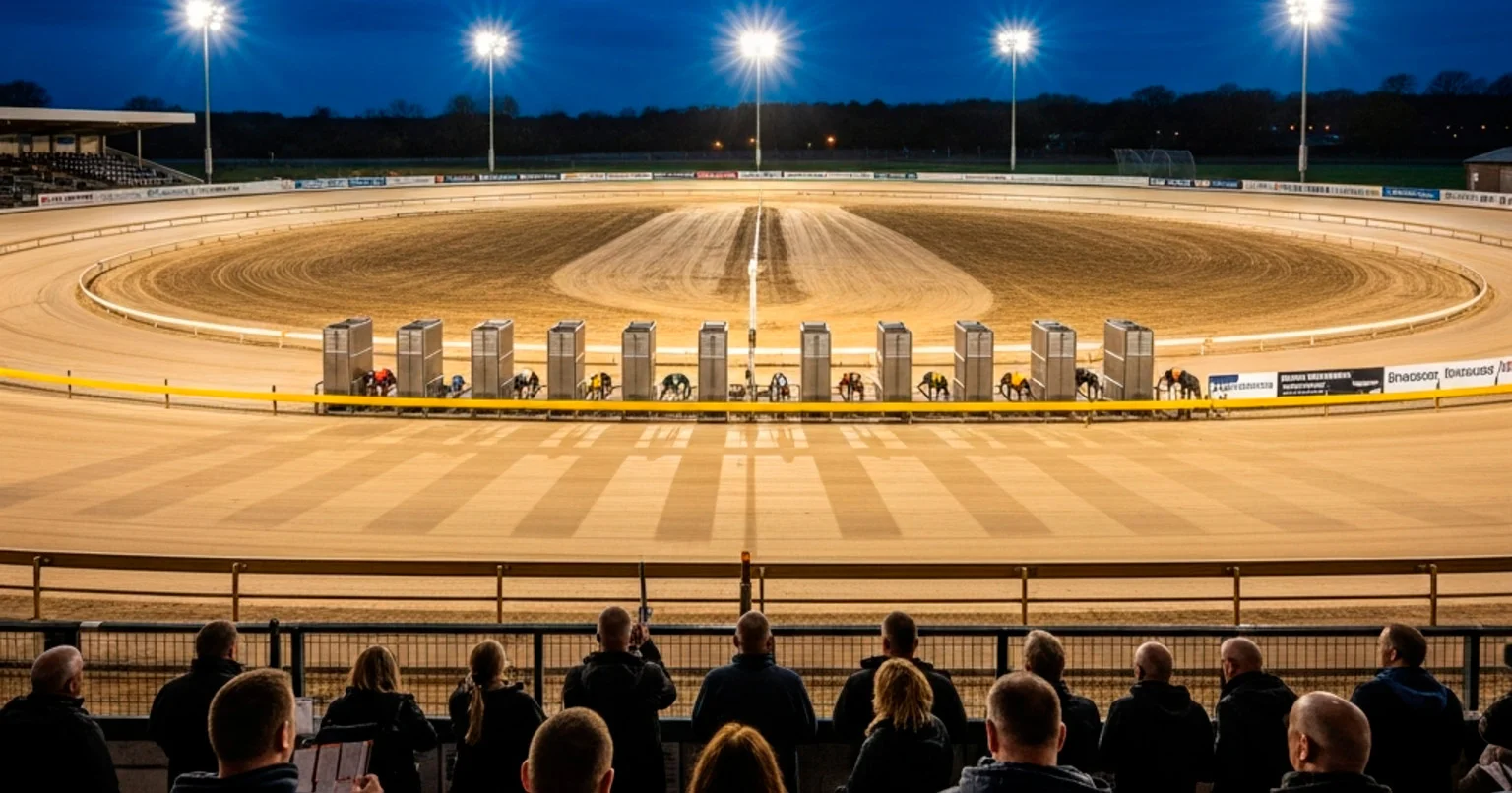
Owlerton Stadium is one of those places that feels bigger than its physical footprint. Tucked into Sheffield’s S6 postcode, just a few miles northwest of the city centre, it has been staging greyhound racing since 1932 and shows no signs of slowing down. The venue ranks as the fourth most popular greyhound track in the United Kingdom, hosting more than 260 meetings every year and drawing upwards of 300,000 visitors through the gates annually. Those are not the numbers of a sport in decline. They are the numbers of a venue that has worked out exactly what it is and who it serves. Greyhound racing as a whole contributes £164 million a year to the UK economy and supports 5,400 jobs, and Owlerton is one of the venues that makes those figures tangible.
This guide is built for anyone planning a visit, whether you are a seasoned punter who has been coming for years or someone who stumbled across the idea of a race night and wants to know what to expect. We will walk through the stadium’s facilities, explain the track layout and what it means for racing, describe the atmosphere on a typical evening, cover the practical logistics of getting there, and map out the racing calendar so you can time your trip. Think of it as the conversation you would have with a local who knows the place inside out — except written down, with the numbers to back it all up.
Owlerton Stadium — More on this topic at sheffield greyhound results.
Inside Owlerton: Facilities, Bars and Trackside Seating
Owlerton’s total capacity sits at around 4,000, which makes it mid-sized by greyhound standards but more than large enough to accommodate the regular crowds and still feel lively when the stands are not at full capacity. The stadium is owned and operated by the A&S Leisure Group, a Sheffield-based leisure company that acquired the venue in 1991 and has invested in keeping the infrastructure functional without stripping out the character that regulars have grown attached to. In 2018, the stadium signed a media rights deal with Arena Racing Company to broadcast meetings via SIS feeds, further integrating Sheffield into the national betting ecosystem.
The main grandstand runs along the home straight and offers tiered seating with a clear sightline to the first bend — the stretch of track where most races are decided. Below the stand, glass-fronted sections give you a warm, dry view of the action on nights when the Yorkshire weather does what Yorkshire weather does. There is no pretending this is a five-star resort, but the sightlines are good, the seats are comfortable enough for twelve races, and you are close enough to the track to hear the dogs’ footfall on the sand.
Two bars service the main areas. The larger of the two sits inside the grandstand and handles the bulk of the Friday and Saturday traffic. On busy evenings, particularly during summer when footfall climbs, it can get crowded between races, so regulars tend to get their round in during the less popular races on the card. A smaller bar operates near the entrance area, which is useful if you are arriving late and want to settle in without fighting through the main crowd. Both serve a standard selection of draught beer, spirits and soft drinks — nothing fancy, but nothing offensive either.
The restaurant occupies the upper level of the grandstand and is the centrepiece of Owlerton’s hospitality offering. Race night dining packages start from around £20 per head on Fridays and offer a meal with a view of the track, a racecard and a reserved table for the evening. For groups, the restaurant works well: you can fit hen parties, birthday gatherings and corporate outings in there without anyone needing to stand. The food leans towards traditional British fare — think pie and chips, carvery options, and a dessert that will not win any awards but will keep you going through the final few races.
Beyond the restaurant, the stadium has a function room that can be hired out for private events. It is used for everything from charity nights to Christmas parties, and the management team is experienced enough at running these events that the logistics are reasonably smooth. Track-facing windows in the function space mean guests can still watch the racing without leaving the room.
Outside, the trackside standing area is where the atmosphere is at its rawest. This is open-air and unassigned — first come, first served against the rail. For anyone who wants to feel the race rather than just watch it, this is the place to be. You can hear the hare mechanism whir, the traps snap open, and the dogs accelerate past you within a few metres. On a warm Friday evening, the rail is packed two or three deep with punters holding racecards and pints in roughly equal numbers.
Track Layout: Circumference, Bends and Run to First Turn
Numbers matter at every greyhound track, and at Owlerton three figures define the racing more than any others: the circumference of 425 metres, the 62-metre run to the first turn, and a total of nine race distances ranging from 280 metres up to 934 metres. These are not just specifications on a blueprint. They directly influence which dogs perform well, which traps offer an advantage, and how you should think about form when studying the racecard.
The 425-metre circumference puts Sheffield in the mid-range among UK tracks. It is not as tight as some of the smaller circuits, where the bends come thick and fast and inside runners have an exaggerated advantage, nor is it as spacious as the larger ovals where wide runners can sweep around the outside without losing ground. At Owlerton, the bends are firm enough to reward dogs who can hold a position on the rail, but open enough that a strong, rangy dog with pace can still make up ground from a wider path. The result is a track that does not heavily favour one running style over another — which is part of why it produces competitive, watchable racing.
The 62-metre run to the first turn is the most tactically significant measurement at Sheffield. That distance — from the starting traps to the point where the field enters the first bend — determines how much time dogs have to establish their position before the inevitable crowding that comes when six animals funnel into a curve. Sixty-two metres is moderate. It is enough for a quick beginner from trap 1 or 2 to grab the rail, but it also gives a dog with genuine early pace from traps 4, 5 or 6 time to cross and claim a decent position before the bend tightens. On shorter run-ups, inside traps tend to dominate because there simply is not enough straight to overcome the geometry. At Owlerton, the run-up offers more balance, though it is still worth paying attention to how individual dogs break from the boxes.
The nine distances cover every category of greyhound racing. At the shortest end, the 280-metre and 362-metre sprints are pure speed tests. These races involve minimal bending — the 280 starts on the back straight and is essentially a dash to the line — and early pace is everything. If a dog does not lead within the first three seconds, the race is usually over. The 480-metre and 500-metre distances are the Sheffield workhorses, the standard trips where the bulk of graded racing takes place. These require a balance of speed and stamina, with enough bends to introduce tactical variety and enough straight to reward acceleration. The 660-metre and 720-metre events move into stayers’ territory, where dogs who can relax through the early bends and sustain their effort over more than a full circuit start to shine. And at the top end, the 800, 915 and 934-metre marathons are endurance events that test a different kind of greyhound entirely — one that does not panic in traffic and has the cardiovascular engine to keep running long after the sprinters would have emptied the tank.
The track surface at Sheffield is sand, as it is at every licensed GBGB venue in the country. Sand provides a consistent, all-weather surface that drains reasonably well after rain, though conditions can still vary depending on how much moisture the surface has absorbed. The stadium staff water the track before meetings to maintain consistency, but heavy rain during a meeting can change the going mid-card. We will cover weather effects in more detail elsewhere, but the key point for visitors is that Sheffield races in almost all conditions — cancellations due to weather are rare.
One other detail worth noting: the hare at Owlerton is an Outside Swaffham type, which runs on the outside of the track. This is the standard configuration at most UK venues and means the dogs are drawn towards the outside rail in pursuit of the lure. It sounds like a minor detail, but it subtly influences running lines, particularly on the bends, where dogs will drift wider than they might on an inside-rail hare track. For bettors, this is another small factor to weigh when assessing how a dog’s preferred running style interacts with the track layout.
What a Race Night at Owlerton Looks Like
A race night at Owlerton starts before you even walk through the gates. The car park begins filling from about an hour before the first race, and there is a particular energy to a greyhound stadium in the lead-up — people arriving in groups, the floodlights already on, the muffled sound of the PA system running through early announcements. It is not the frenzy of a football ground or the forced excitement of a theme park. It is something more relaxed, more social, and that is exactly the point.
A standard evening card at Sheffield typically features twelve races, spaced roughly fifteen minutes apart. That pacing is important. It gives you time to study the next race, place your bets, get a drink, and actually have a conversation between events. The rhythm of a greyhound meeting is one of its best features — it is fast enough to stay engaging but not so relentless that you feel rushed. Each race lasts between seventeen and fifty-five seconds depending on distance, so the events themselves are intense, compressed bursts of action followed by the post-race analysis that every punter engages in, whether they admit it or not.
The atmosphere varies depending on the night and the time of year. Friday and Saturday evenings are the busiest, drawing a mix of regulars, groups out for a social occasion, and couples on date nights. During the summer months, Owlerton’s footfall climbs noticeably — the stadium reports that more than 4,000 additional visitors come through during the warmer period, and roughly 50% of those summer attendees are women. The venue introduced what is believed to be the only dedicated Ladies Day in UK greyhound racing, an initiative that has helped shift the demographic profile and bring in a crowd that traditional greyhound marketing has historically neglected.
For feature events, the atmosphere steps up several gears. The Steel City Cup final — Sheffield’s premier race, a Category One event run over 500 metres — transforms the stadium. Andrew Mascarenhas, the Director of Racing at Owlerton, captured the feel of a recent final night when he noted that the restaurant was packed, connections of the finalists were well taken care of, and the visiting fans from competing kennels brought a genuine buzz that carried through the evening. There is something about a final that concentrates the stadium’s energy. The betting is sharper, the crowd is louder, and the post-race conversation carries more weight.
The race night packages mentioned earlier are a significant part of what makes Owlerton accessible to newcomers. You arrive, eat, watch dogs run, have a few bets if you feel like it, and head home. For groups — stag and hen parties, work outings, birthday celebrations — the packages scale up to include drink options and better seating. The stadium has clearly built its commercial model around making the entry point as low as possible, which is smart. A first-time visitor who has a good night will come back. A first-time visitor who feels intimidated by the environment or stung by the cost will not.
One thing to manage expectations about: Owlerton is not a luxury venue. The infrastructure is functional and well-maintained, but it carries the visual hallmarks of a stadium that has been in continuous operation for over ninety years. The carpets have seen better decades, some of the signage looks like it was last updated during the Major government, and the toilets are clean but basic. None of this detracts from the experience if you know what you are walking into. This is a working greyhound stadium, not a hospitality showcase, and the character comes from the racing, the crowd and the setting — not from the interior design.
Getting to Owlerton: Location, Parking and Public Transport
Owlerton Stadium sits on Penistone Road in the Owlerton district of Sheffield, postcode S6 2DE. If you are driving from the M1, the standard route is to come off at junction 36 and follow the A61 north towards Sheffield. From the city centre, Penistone Road heads directly northwest and the stadium is signposted from about half a mile out. The drive from central Sheffield takes roughly ten minutes in normal traffic, though on Friday evenings the Penistone Road corridor can slow down, so allow a little extra time if you are cutting it fine for the first race.
The on-site car park holds around 700 vehicles. Entry is free on most meeting nights, and the surface is tarmac with marked bays. It fills from the far end first, so if you arrive within thirty minutes of the first race you will likely be parking towards the back, but it is still a short walk to the entrance. On the rare occasions when the car park is full — typically major finals or promotional nights — there is street parking available on the surrounding residential roads. Be sensible about this: do not block driveways, and check for restrictions before you leave the car. The neighbours have been living alongside a greyhound stadium for decades and are generally tolerant, but that tolerance has limits.
Public transport options are decent for a venue that sits slightly outside the city centre. The number 57 and 86 bus routes serve stops on Penistone Road within a few minutes’ walk of the stadium. From Sheffield Interchange, the journey time is around twenty minutes. On Friday and Saturday evenings, services run late enough to get you home after the last race, though it is worth checking the timetable on the day rather than assuming — bus schedules have a habit of changing seasonally.
Sheffield’s tram network does not serve Owlerton directly, but the Supertram stops at Hillsborough and Malin Bridge, both of which are within reasonable walking distance — perhaps fifteen to twenty minutes on foot. This is fine in summer but less appealing on a wet November evening, so factor the weather into your transport choice.
Taxis and ride-hailing services are the fallback option and work well. The journey from Sheffield city centre to Owlerton is short enough that the fare stays modest, and the stadium entrance is easy for drivers to find. After the meeting, the car park can be slow to empty, so walking to Penistone Road and hailing a cab from the main road is often quicker than waiting for one to navigate through the post-race traffic.
Accessibility at the stadium is adequate but not exceptional. There is level access to the main viewing areas and the restaurant, and disabled parking spaces are available close to the entrance. The trackside standing area is fully accessible for wheelchair users. However, some of the older parts of the grandstand involve steps, and the toilet facilities in certain sections are not fully adapted. If you have specific access needs, calling the stadium in advance is the best approach — the staff are helpful and will make arrangements where possible.
Racing Season at Sheffield: When to Visit
Owlerton does not have an off-season in the traditional sense. Greyhound racing at Sheffield runs year-round, with the stadium staging those 260-plus meetings annually across virtually every week of the calendar. The core schedule revolves around Friday and Saturday evenings, which are the main public-facing meetings. These are the nights with the biggest crowds, the best atmosphere, and the most competitive racing. If you are coming for the experience as much as the sport, Friday or Saturday is your night.
See also Sheffield Greyhound Trap Statistics.
Midweek meetings — typically on Tuesday, Wednesday or Thursday — fill out the rest of the calendar. These are predominantly BAGS fixtures, which stands for Bookmakers’ Afternoon Greyhound Service. BAGS meetings are contracted by bookmakers and broadcast into betting shops and online platforms via SIS feeds. They are genuine racing events with genuine form, but the atmosphere in the stadium is quieter. Crowds at midweek BAGS meetings are small, sometimes just a handful of dedicated regulars and a few trainers watching their dogs. If you want to study the racing in peace, a midweek visit has its appeal. If you want buzz and energy, save it for the weekend.
The distinction between BAGS meetings and Open racing is worth understanding if you plan to visit regularly. BAGS meetings tend to feature graded racing — dogs grouped by ability into categories — with shorter cards and a functional, no-frills presentation. Open racing, by contrast, is where the higher-quality dogs compete, often in conditions races or feature events that attract entries from across the country. The Steel City Cup, Sheffield’s marquee competition, is an Open event and the highlight of the Owlerton calendar.
Seasonally, summer is peak time at Sheffield. The longer evenings, warmer weather and lighter schedule of competing entertainment draw larger crowds. Owlerton’s summer footfall spike is well documented: more than 4,000 additional visitors over the season, with that notable demographic shift towards a younger, more mixed audience. Ladies Day events — unique to Owlerton in UK greyhound racing — typically fall in the summer months and add a social element that goes beyond the standard race night format. If you want to see the stadium at its most vibrant, June through August is the window.
Winter meetings have their own appeal. The crowds are smaller, the atmosphere is more intimate, and the regulars who attend through the cold months tend to be more knowledgeable about the sport. The stadium’s indoor viewing areas and restaurant make it a viable destination even when the temperature drops, though the trackside standing area loses some of its charm when you are watching twelve races in a biting wind off the Pennines. Track conditions can also shift in winter — heavier rain affects the sand surface and can alter trap bias patterns — which adds another layer of consideration for serious punters.
Key dates to mark on the calendar for 2026 include the Steel City Cup, which traditionally runs in the autumn with heats, semi-finals and a final spread across several meetings. The prize fund for the 2025 final stood at £11,500 to the winner — claimed by Romeo Steel — and the event carries Category One status, the highest tier in GBGB-sanctioned competition. Beyond the Steel City Cup, Owlerton hosts various other feature races and invitational events throughout the year, though these are not always announced far in advance. Keeping an eye on the stadium’s own website and GBGB’s fixture list is the most reliable way to stay informed.