BAGS Racing at Sheffield: What Bookmaker-Contracted Meetings Mean for Punters
Best Greyhound Betting Sites – Bet on Greyhounds in 2026
Loading...
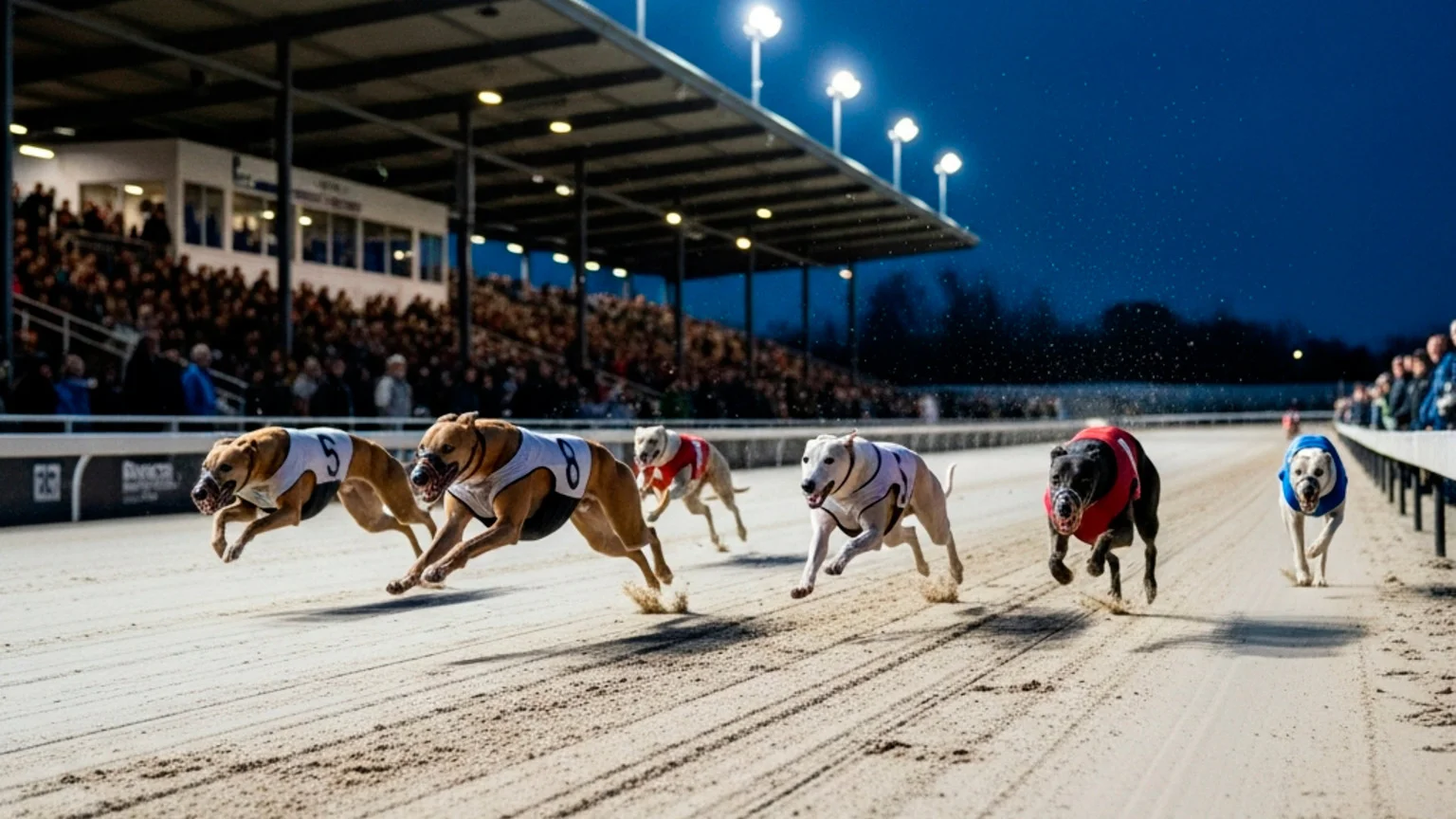
BAGS racing at Sheffield is the engine that keeps Owlerton Stadium running. The Bookmakers’ Afternoon Greyhound Service is the commercial framework that funds the majority of greyhound meetings in Britain, and Sheffield is one of its most prolific suppliers. If you have ever placed a bet on Sheffield greyhounds during a weekday afternoon — in a betting shop, on an app, or through any online bookmaker — you were almost certainly betting on a BAGS meeting. The system is invisible to most punters, but it shapes everything: when races happen, how many races are on the card, and what the betting market looks like.
Understanding how BAGS works does not just satisfy curiosity. It gives you a practical advantage, because the structure of a BAGS meeting differs from open racing in ways that directly affect the form, the grading, and the way odds are priced. If you bet on Sheffield greyhounds with any regularity, BAGS is the system you are navigating whether you realise it or not.
How the BAGS System Works in UK Greyhound Racing
BAGS stands for the Bookmakers’ Afternoon Greyhound Service, a name that dates back to an era when greyhound racing was a predominantly afternoon activity designed to fill the gap between morning and evening entertainment. The name has stuck even as the reality has evolved — BAGS meetings now run throughout the day and into the evening, and the service extends well beyond traditional afternoon slots.
The mechanics are straightforward in principle. Content suppliers — primarily ARC (Arena Racing Company) and SIS (Satellite Information Services) — negotiate contracts with bookmakers to provide live greyhound racing content for their betting platforms. These contracts specify how many meetings will be supplied, when they will run, and how the revenue will be shared. The tracks that host BAGS meetings receive a fee for providing the racing, which forms a significant portion of their income. In return, they commit to delivering a specified number of races per meeting, on schedule, with full fields wherever possible.
The scale of the system is substantial. The Gambling Commission’s most recent industry statistics counted 5,825 licensed betting shops in Britain for the financial year ending March 2025. The vast majority of these premises carry live greyhound racing on their screens throughout the day, supplied through BAGS contracts. Add to that the online platforms — the apps, the websites, the live streaming services — and the total audience for BAGS greyhound racing dwarfs anything that could be generated by in-stadium attendance alone.
This is the fundamental point about BAGS: it turned greyhound racing from a spectator sport into a content product. The racing still happens on a real track with real dogs, but its primary consumption is remote — people watching on screens and betting through digital interfaces. Owlerton Stadium, like every other BAGS track, serves two audiences simultaneously: the handful of people who are physically present at the stadium, and the thousands of punters across Britain and beyond who are engaging with the meeting through their bookmaker.
BAGS Meetings in the Sheffield Schedule
Sheffield is one of the busiest BAGS venues in Britain. Owlerton hosts more than 260 meetings per year, and the overwhelming majority of those are BAGS-contracted fixtures rather than independently scheduled open meetings. On a typical week, Sheffield might stage four or five BAGS meetings — primarily on weekday afternoons, with the exact days and times determined by the content supply contracts.
The structure of a BAGS meeting at Owlerton is standardised to a degree that might surprise first-time observers. A typical card features twelve to fourteen races, spaced at intervals of approximately fifteen minutes, with the first race going off in the late morning or early afternoon and the last race finishing mid-to-late afternoon. This regimented schedule is not arbitrary; it is designed to interlock with BAGS meetings at other tracks around the country, so that bookmakers always have a race about to start, regardless of the time. On a busy afternoon, there might be six or eight BAGS meetings running simultaneously at different stadiums, with Sheffield occupying one slot in the rotation.
The races themselves are graded, meaning the dogs are matched by ability within each contest. The racing manager at Owlerton is responsible for compiling the cards — selecting which dogs run in which races, ensuring that fields are competitive within their grade, and managing the flow of dogs through the grading system so that the same animals are not repeatedly mismatched. This is a skilled job that sits at the intersection of animal welfare, competitive fairness and commercial obligation, because the BAGS contract requires full fields and competitive racing, not just any racing.
Friday and Saturday evenings at Sheffield typically operate outside the BAGS framework, functioning as open or feature meetings with a different character. These are the nights when the stadium is open to the public for hospitality and social events, and the racing is scheduled to accommodate an in-person audience rather than a broadcast timetable. The contrast between a Tuesday afternoon BAGS meeting and a Friday evening open meeting at Owlerton is stark — same track, same dogs in many cases, but an entirely different context for the racing.
What BAGS Racing Means for Your Betting
The BAGS system has several practical implications for punters that go beyond the scheduling convenience of having Sheffield races available almost every day of the week. The most important is data density. Because BAGS meetings happen so frequently and feature the same pool of dogs racing at the same track, the form database for Sheffield is unusually rich. A dog competing regularly at Owlerton might run every seven to ten days, generating a continuous stream of performance data that allows detailed trend analysis. Compare this with a track that runs once a week and the advantage is obvious — at Sheffield, your form sample is three or four times larger over any given period.
This density also affects grading speed. Dogs at busy BAGS tracks move through the grading system more rapidly than those at less active venues, because the racing manager has more evidence on which to base regrading decisions. A dog that wins twice in a week at Sheffield will likely be raised in grade almost immediately, whereas the same dog at a less busy track might wait two or three weeks for an adjustment. For punters, this means the grading at Sheffield is relatively responsive and current — but it also means that a dog in form can be moved up before you have had a chance to back it at its current grade.
Market efficiency is another consideration. BAGS meetings at Sheffield attract substantial betting volume because the races are broadcast nationwide and available on every major bookmaker’s platform. High-volume markets tend to be more efficient — the prices are sharper, the overround is smaller, and the bookmakers are faster to react to market intelligence. Finding value at a busy BAGS meeting requires more effort than finding it at a low-profile open meeting where the market is thinner and less well-informed.
The flipside is liquidity. If you bet on exchanges like Betfair, BAGS meetings at popular tracks like Sheffield generally offer better liquidity than quieter fixtures. You can get larger bets matched, the spreads are tighter, and the BSP is more likely to reflect a genuine market consensus. For punters who operate at higher stakes or who prefer exchange betting to fixed-odds bookmakers, the BAGS schedule at Owlerton provides a reliable stream of tradeable markets throughout the week.