Major UK Greyhound Races: English Derby, St Leger, Steel City Cup and More
Best Greyhound Betting Sites – Bet on Greyhounds in 2026
Loading...
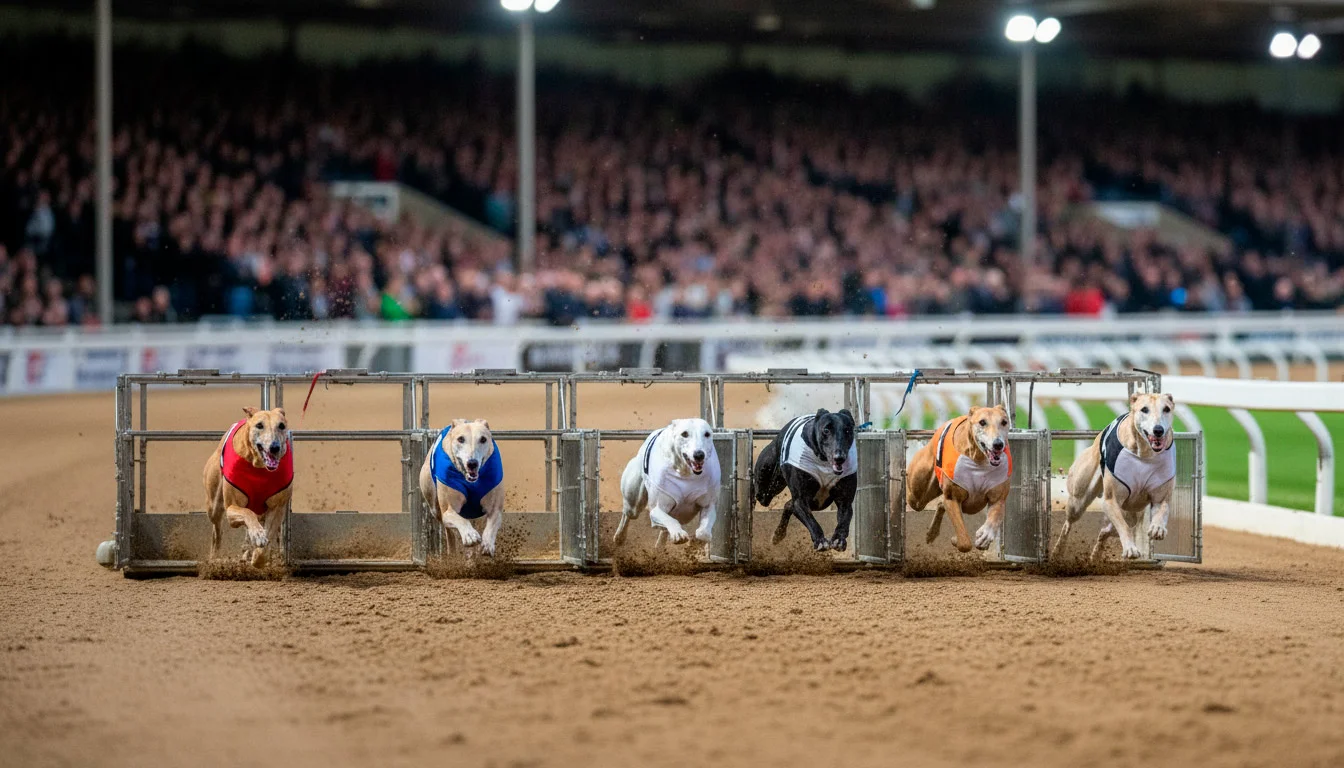
Major UK greyhound races are the events that give the sport its narrative arc. Week-to-week graded racing at tracks like Sheffield provides the rhythm, but it is the big competitions — the Derby, the Leger, the Oaks, the Cup finals — that create the stories people remember. These are the races where the best dogs in Britain meet on the biggest nights, where prize funds climb into six figures and where a single performance can define a greyhound’s career and cement a trainer’s reputation.
The major races are spread across the calendar and across the country, with different tracks hosting different flagship events. Understanding which competitions matter most, what they are worth and where Sheffield’s own Steel City Cup fits within the hierarchy gives context to the broader landscape of British greyhound racing — a landscape that is smaller than it once was but still produces moments of genuine sporting drama.
English Greyhound Derby: The Sport’s Biggest Prize
The English Greyhound Derby is the single most prestigious event in British greyhound racing and one of the most valuable prizes in the sport globally. The 2025 edition, held at Towcester over 500 metres, offered £175,000 to the winner — a sum that dwarfs every other prize fund in the sport and places the Derby in a category of its own. The total prize pool across all rounds is larger still, ensuring that even dogs eliminated in the early heats earn meaningful returns for their connections.
The Derby has been the centrepiece of the greyhound racing calendar since its inauguration in 1927, making it almost as old as the sport itself in Britain. It has been staged at various venues over its history — White City, Wimbledon, and most recently Towcester — and each move has reflected the shifting geography of British greyhound racing as tracks have opened and closed around it. The competition’s prestige has remained constant regardless of location, because it is the race itself that carries the status, not the track.
The format follows a multi-round elimination structure: first-round heats narrow a large entry down to quarter-finals, semi-finals and a six-dog final. The qualification process spans several weeks and generates intense betting interest at every stage, with the ante-post market for the final opening as soon as the early heats reveal the leading contenders. For trainers and owners, reaching the Derby final is an achievement in itself; winning it is the pinnacle of a career in greyhound racing.
From a betting perspective, the Derby produces some of the highest-turnover markets in the greyhound calendar. The quality of the fields, the depth of form and the media coverage all combine to create markets that are liquid, well-informed and fiercely competitive. Finding value in a Derby market is significantly harder than in a standard graded race at Sheffield — but the challenge is part of the appeal for serious punters.
St Leger, Oaks and Other Classic Races
Below the Derby in the hierarchy but still carrying substantial prestige are the other classic races that make up the greyhound calendar. The St Leger, traditionally run over a staying distance of 710 metres, tests a different type of dog to the Derby — it rewards stamina and sustained speed rather than the explosive pace required for a 500-metre sprint. The Leger has its own devoted following among punters who specialise in staying races and who appreciate the tactical complexity that longer distances produce.
The Greyhound Oaks serves as the female equivalent of the Derby, restricted to bitches and carrying a prize fund that, while smaller than the Derby, represents the most valuable prize available to female greyhounds in Britain. The Oaks attracts high-quality entries from across the country and generates strong betting interest, partly because the restricted field creates different form dynamics — the absence of the very best open-class dogs means that the market is less predictable, which creates more opportunities for punters who have studied the form carefully.
Beyond the classics, a tier of Category One and Category Two races at individual tracks provides the competitive infrastructure of the sport. The Scottish Derby, the Cesarewitch, the Essex Vase, the Champion Stakes — each of these competitions has its own history, its own traditions and its own place in the affections of the greyhound community. They are the events that sustain interest between the headline acts, and they ensure that every region of England has at least one major race to call its own.
Prize funds across these events vary considerably. The gap between the English Derby’s £175,000 and the typical Category Two final prize of a few thousand pounds is enormous, but the prestige value extends beyond the cheque. Winning any classified open race at a GBGB track confirms a dog’s quality and elevates the status of everyone involved in its career.
Where Sheffield’s Steel City Cup Ranks
The Steel City Cup is Sheffield’s entry on the map of major UK greyhound races, and it holds its position with a combination of history, Category One status and a prize fund that reached £11,500 for the 2025 final. In the overall hierarchy, the Cup sits comfortably within the top tier of regional Category One events — below the English Derby and the other national classics in prize money and public profile, but above the majority of open races at other tracks.
What the Steel City Cup offers that some larger events do not is an intense connection to its home venue. The Derby moves between tracks; the Steel City Cup belongs to Owlerton. The competition was first run in 1970 and has never been staged anywhere other than Sheffield, which gives it a local identity and a community following that transportable events cannot replicate. For Sheffield punters, the Cup is not just another race on the calendar — it is their race, run on their track, in front of their crowd.
The Cup also serves as a gateway for Sheffield dogs to national attention. A dog that performs well in the Steel City Cup heats and final demonstrates ability at Category One level, which opens doors to entries at other prestigious events around the country. Trainers based in the Sheffield area use the Cup as a springboard, testing their best dogs against high-quality opposition before deciding whether to campaign them at national level.
Annual Calendar of Major UK Greyhound Events
The major races are distributed across the calendar in a pattern that gives the sport a shape recognisable to anyone who follows it through the year. Spring typically opens with early-season open races and preparation trials for the Derby, which itself is contested in June. The summer months bring the Oaks and a cluster of high-profile competitions that take advantage of longer evenings and increased attendance. Autumn is the season for the St Leger and for regional Cup finals, including the Steel City Cup at Sheffield, which typically falls in this window.
Winter is the quietest period for major events but not for racing itself — the BAGS schedule continues throughout the colder months, and some stadiums use the January-to-March window for early-season open competitions that give trainers a target for dogs returning from rest or entering a new campaign. The density of the major events calendar ensures that there is almost always something significant on the horizon, even during the quieter stretches.
For punters who follow the major races specifically, the calendar creates a series of natural research windows. The weeks leading up to each big event are when the form from qualifying heats becomes available, when the ante-post markets open, and when the best opportunities for value betting arise. The punter who plans around the major events calendar — rather than treating each race as an isolated occurrence — gains an informational advantage that compounds over the course of a season. The major races reward engagement with the sport as a whole, not just with a single track or a single meeting.