Owlerton Track Records: All-Time Fastest Times at Sheffield Greyhounds
Best Greyhound Betting Sites – Bet on Greyhounds in 2026
Loading...
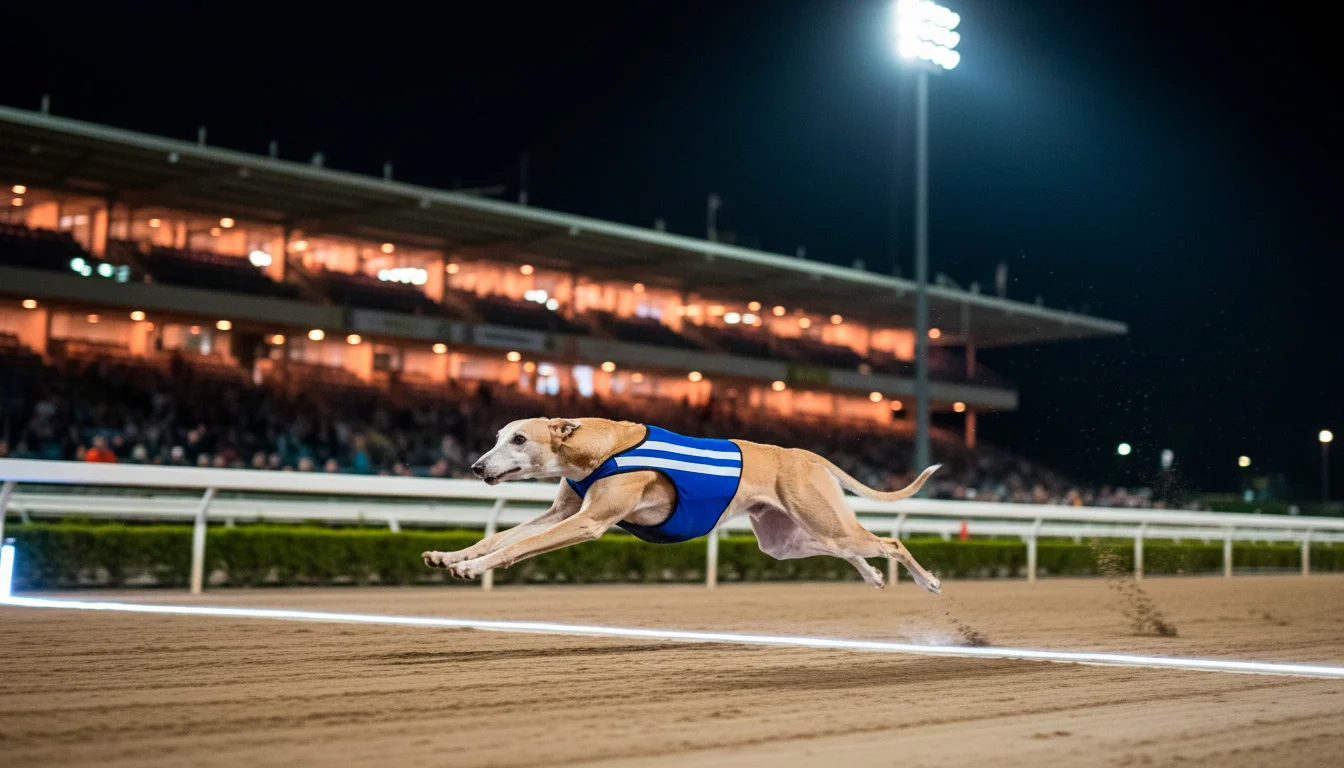
Owlerton track records are the benchmarks against which every greyhound that races at Sheffield is ultimately measured. They represent the absolute fastest a dog has covered each distance on this specific track, under the specific conditions that Owlerton presents — its 425-metre circumference, its sand surface, its Outside Swaffham hare, and the 62 metres of straight before the first bend. A track record at one stadium means nothing at another, because no two circuits in British greyhound racing are identical.
What makes these records worth studying goes beyond simple admiration for speed. Each one tells a story about the era it was set in, the type of dog that set it, and the conditions that allowed it to happen. Some Owlerton records have stood for decades, suggesting that the combination of surface, distance and geometry has created a natural ceiling. Others have been broken multiple times in recent years, hinting at improvements in breeding, training methods, or track preparation. For punters, understanding track records provides context: when a dog runs within a second of the record time, you are looking at a genuinely top-class performance, not just a fast number on a results page.
Track Records Across All Nine Distances
Owlerton’s nine racing distances each carry their own track record, and collectively they form a profile of the stadium’s character. The sprint records at 280 and 362 metres tend to be held by pure speed merchants — dogs with explosive early pace and the ability to hold their line through one or two bends without losing momentum. These times are often expressed in fractions of a second, where a hundredth can separate an ordinary fast run from a record-breaking one.
At the standard distances of 480 and 500 metres, the records reflect a balance between pace and endurance. The historical data compiled by GreyhoundRacingHistory.co.uk shows that these records have been updated more frequently than the sprint marks, largely because the 480 and 500 feature in the majority of races at Sheffield and the sheer volume of runs gives faster dogs more opportunities to post exceptional times. The 500-metre record carries particular weight because it is the distance used for the Steel City Cup, Sheffield’s flagship competition.
The staying records — 660, 720, 800 and 915 metres — are a different proposition entirely. Fewer dogs are campaigned over these trips, and fewer races are programmed, which means records here can stand for much longer periods. A record over 915 metres might have been set in a year when a single exceptional stayer happened to be racing at Owlerton, and no dog of comparable quality has appeared since. This does not diminish the record; it actually makes it more remarkable, because it highlights just how rare that level of sustained speed is over marathon distances.
It is worth noting that track records can be affected by factors outside the dog’s control. Surface conditions, wind direction, hare speed and even the quality of opposition all play a role. A dog running alone at the front of a weak field, with a tailwind down the back straight, will record a faster time than the same dog fighting for position in a closely matched race with a headwind. Record times should be respected, but they should also be read with an understanding of the circumstances that produced them.
The nine-distance structure at Sheffield means the track’s full record list is longer than most stadiums in Britain. Only a handful of GBGB tracks offer this many distances, and Owlerton’s comprehensive set of records provides an unusually complete picture of what the circuit is capable of producing at every trip from pure sprint to marathon.
What Track Records Tell Us About Owlerton’s Character
Every greyhound track in Britain has a personality, and track records are the clearest expression of it. Owlerton is a tight circuit compared to venues like Towcester or Nottingham, and that compactness shapes the kind of times that are possible. The bends are sharper, which means dogs lose more speed through each turn compared to wider tracks. The modest run to the first bend ensures that early crowding is a persistent feature of Sheffield racing, and that crowding costs fractions of a second that accumulate over multiple turns.
These characteristics show up in the record times. Owlerton’s sprint records are competitive with other tracks of similar size, because the short straight and quick bends suit dogs that accelerate sharply and hold a tight racing line. But the standard-distance records tell a different story. The tight bends scrub more speed over four turns than they do over one or two, so the 480 and 500-metre records at Sheffield tend to be slightly slower than equivalent distances at larger circuits.
This matters for punters because it calibrates expectations. A dog arriving at Owlerton with impressive times from a bigger track — say Nottingham, which has a longer run to the first bend and wider turns — may not reproduce those times at Sheffield. The geometry works against it. Conversely, a dog that has posted quick times at Sheffield may perform even better when transferred to a more galloping track. The Steel City Cup, with its prize fund that reached £11,500 in 2025, regularly draws dogs from other stadiums, and the adjustment between track configurations is one of the key factors in assessing their chances.
Records That Defined Eras at Sheffield
Some track records at Owlerton are not just fast times — they are markers of eras in Sheffield greyhound racing. The stadium has been hosting racing since its official opening in 1932, when a crowd of 10,000 watched the first card, and nearly a century of competition has produced waves of exceptional dogs, each pushing the boundaries of what was thought possible on this circuit.
Records set during the sport’s peak decades, roughly the 1960s through the 1980s, reflected a period when greyhound racing was among the most popular spectator sports in Britain. Prize money attracted the best dogs and the best trainers, and competition was fierce. Many of the records from that era stood for remarkably long periods, because the quality of the fields was consistently high and opportunities for a single outstanding performer to dominate were limited.
The 1991 renovation of Owlerton, a £3 million project that modernised the stadium’s facilities, also affected the racing surface and track configuration. Some pre-renovation records became effectively incomparable to post-renovation performances, because the track the dogs raced on was physically different. This is a nuance that often gets lost when people simply compare raw times across decades. A 28.50-second 500 metres in 1985 and a 28.50 in 2010 are not the same achievement, because the surface, the hare system and the rail positioning may all have changed.
In recent years, advances in greyhound nutrition, training science and veterinary care have produced faster dogs as a general trend across UK racing. Whether this translates into more records being broken at Owlerton depends partly on whether the right dogs end up racing at Sheffield and partly on whether the track conditions on any given night align with optimal performance. Records are broken on good nights, not average ones — and that combination of the right dog, the right draw, the right surface and the right weather is rarer than most people assume.