How Greyhound Grading Works at Sheffield: From Open Races to Puppy Events
Best Greyhound Betting Sites – Bet on Greyhounds in 2026
Loading...
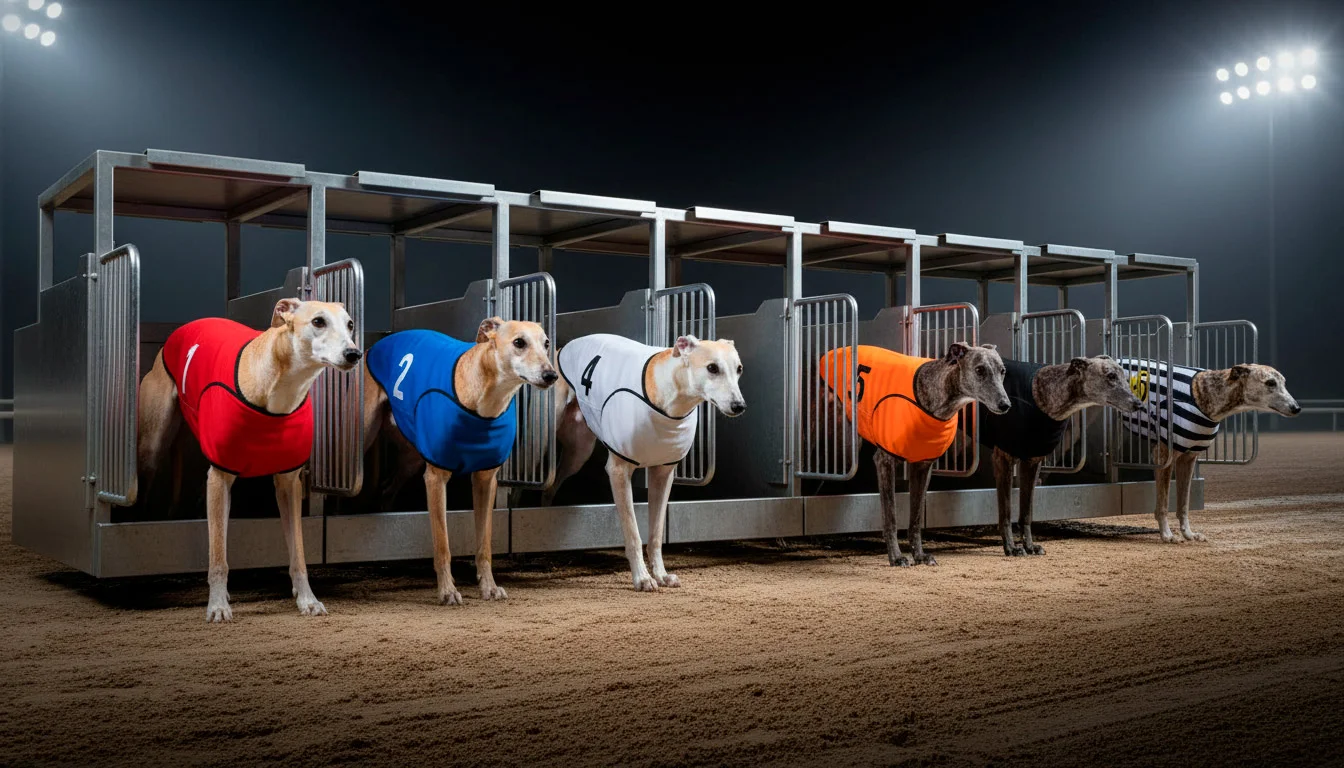
Greyhound grading at Sheffield is the system that determines which dogs race against each other — and understanding it is essential for anyone who wants to make sense of the form book at Owlerton. Unlike horse racing, where handicapping assigns weight penalties to create theoretically even contests, greyhound racing uses a grading system that groups dogs by recent performance. The idea is simple: dogs that have been winning should face stiffer competition, while dogs that have been struggling should drop to a level where they can compete. The execution, as with most things in racing, is rather more nuanced than the idea.
For punters, grading is not just administrative background noise. It directly affects the quality of each race, the likely pace of the contest, and the reliability of the form you are studying. A dog stepping up in grade faces a fundamentally different challenge to one dropping down, and the racecard will tell you which scenario you are looking at — if you know where to look.
The GBGB Grading System Explained
The GBGB oversees the grading system that applies to all licensed greyhound racing in Britain, including every meeting at Owlerton. The system is built around a hierarchy of grades, with Open races at the top and lower grades descending in steps that reflect the ability and recent performance of the dogs competing.
At the highest level sit Open races, which have no grading restrictions and attract the best dogs available. These are the races where Category One competitions like the Steel City Cup are staged, and where trainers enter their most talented animals regardless of recent form. Below Open racing, the graded structure begins. The top graded tier is typically designated A1, followed by A2, A3 and so on. The precise naming conventions can vary slightly between tracks, but the principle is universal: each grade represents a band of ability, and dogs are placed within it based on their recent race times and finishing positions at that specific track.
Regrading happens on a rolling basis. At Sheffield, the racing manager reviews results and adjusts grades to maintain competitive balance across the fixture list. A dog that wins two or three consecutive races in its current grade will typically be moved up. A dog that finishes in the lower half of the field repeatedly will be moved down. The timing and criteria for regrading are not published as rigid formulas — there is an element of discretion involved, because the racing manager must balance fairness to individual dogs against the need to produce full fields of roughly matched runners across the weekly schedule.
Puppy races occupy a separate strand of the grading system. Dogs under a certain age — typically two years old — compete in designated puppy events that serve as a pathway into the senior grading structure. These races are significant for trainers and owners because they provide early indicators of a dog’s ability and preferred distance. A puppy that wins consistently at Sheffield will enter the graded system at a higher level than one that has been struggling, which shapes its entire subsequent career at the track.
Owlerton’s schedule of more than 260 meetings per year means the stadium requires a large pool of graded dogs to fill its cards. This volume creates a deep grading structure with multiple tiers at each distance, ensuring that dogs of almost every ability level can find competitive racing at Sheffield. It is one of the practical advantages of a busy track: there is always a grade that fits, which keeps dogs racing regularly and generates the form data that punters rely on.
What Grades You’ll See on a Sheffield Racecard
A typical Sheffield racecard on a BAGS meeting will contain races across several different grades and distances. The nine distances available at Owlerton — from 280 metres to 915 metres — each carry their own grading ladder, because a dog’s grade at 480 metres is independent of its grade at 660 metres. A greyhound might be an A2 performer over the standard trip but drop to A4 when tried over a staying distance it has less experience at. This means a single racecard can feature a surprisingly wide spread of grades, and the punter who assumes all races on the card are of similar quality is making a significant error.
The highest-grade races on a standard Sheffield card are usually the A1 events over 480 or 500 metres. These feature the quickest dogs at the track and tend to produce the fastest times and the most competitive finishes. The betting markets for A1 races are generally the most efficient, because the form is well established and the dogs are familiar to regular Sheffield followers. Finding value in these races requires either superior form analysis or a contrarian view on how the race will develop — which trap will lead, how the pace will unfold, whether a particular dog is suited by the draw.
Further down the card, A3 and A4 races over various distances offer a different kind of opportunity. The form is less exposed, the dogs may include recent arrivals at Sheffield who are still being assessed by the racing manager, and the market is less efficient because fewer punters study these races in detail. A dog that has been regraded after a poor run caused by interference — a bad bump on the first bend, a slow start from an unfamiliar trap — can represent genuine value when it drops a grade and gets a more favourable draw.
Open races, when they appear on the card, stand apart from the graded system entirely. They are not subject to the same regrading rules, and the field quality can vary dramatically depending on which trainers have entered. An Open 500 at Owlerton on a feature night might contain dogs of a standard that would embarrass the best A1 field of the week, while an Open sprint at a quieter meeting might be only marginally above the top graded level.
Why Grading Matters When Studying Form
The single most important thing grading tells you about a race is the context of the form. A time of 29.50 seconds over 500 metres means something very different in an A1 race — where the dog was under pressure from five other quick animals — than it does in an A5, where the same dog might have led unchallenged from trap to line. Raw times are only comparable within the same grade, or at least within adjacent grades. Comparing a time set in an A1 to a time set in an A4 without adjusting for the level of competition is a recipe for misjudging ability.
Grade changes are among the most useful signals on a racecard. A dog that has been raised from A3 to A2 is one the racing manager believes has been performing above its current level — it has been winning or running consistently fast times. The question for the punter is whether the dog can maintain that performance against better opposition. Some can; many cannot. The form figures will give you historical evidence, but the grade change itself is the clearest indication that the competitive landscape has shifted.
Drops in grade deserve equal attention. A dog falling from A2 to A3 after a sequence of poor results might look like a declining animal — and sometimes it is. But it might also be a dog that has been racing in the wrong grade for several weeks, consistently outclassed but not lacking ability. When it returns to a more appropriate level, the improvement can be dramatic. The best betting opportunities at Sheffield often come from dogs that are dropping a grade for the right reasons: bad luck, interference, an unsuitable draw in their recent runs. These are the dogs that the form figures undersell and the market undervalues.
The interaction between grading and distance is the final piece of the puzzle. At Owlerton, a dog can be running in A1 at 480 metres and A3 at 660 metres simultaneously. If that dog appears on your racecard at 660, the A3 grade might make it look like an inferior animal — but its A1 performance at 480 tells you it has ability well above the grade it is racing in. These cross-distance comparisons are not available on every racecard platform, but for punters willing to do the extra research, they are a reliable source of value.