Sheffield Greyhound Race Distances Explained: From 280-Metre Sprints to 915-Metre Marathons
Best Greyhound Betting Sites – Bet on Greyhounds in 2026
Loading...
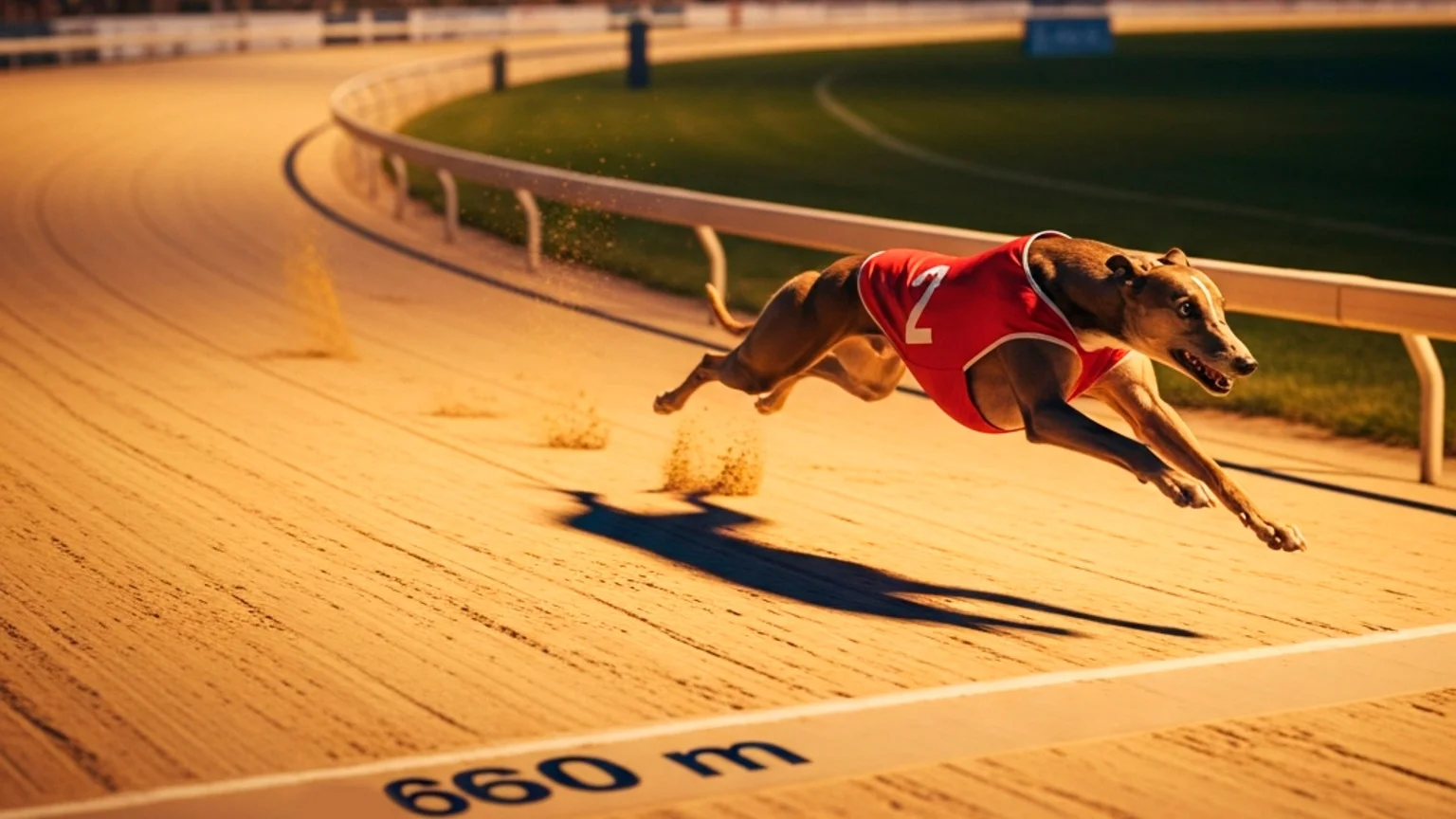
Sheffield race distances are the first thing any serious punter should understand before studying form at Owlerton Stadium. The track offers nine distinct distances, ranging from pure 280-metre dashes to 934-metre marathons, and each one changes the shape of a race in ways that go well beyond the obvious difference in length. The circumference of the Owlerton circuit measures 425 metres, with approximately 62 metres of straight between the boxes and the first bend. That run to the first turn is the single most important stretch of sand at Sheffield, because it determines whether early pace or tactical positioning wins the day.
What makes this track unusual in the context of UK greyhound racing is the sheer variety of distances on offer. Most GBGB-licensed stadiums run four or five distances as standard. Owlerton gives trainers and racing managers nine to work with, which means a dog that looks average over 480 metres might transform into a weapon at 660. Understanding why requires more than a glance at race times. It requires knowing how bend counts, track geometry and running styles interact at each distance.
Sprint Distances: 280m and 362m
The 280-metre dash at Owlerton is the shortest race you will find at any GBGB track in the country. It is run over a single bend, which sounds simple enough until you realise that it compresses an entire contest into roughly sixteen seconds. There is no time to recover from a slow break. There is no room for tactical manoeuvring. The dog that leaves the boxes fastest and holds a clean line into the bend almost always wins, and the form book confirms this with monotonous regularity at this distance.
Trap position matters enormously at 280 metres. With only 62 metres before the first turn, inside runners have a geometric advantage — they cover less ground through the bend, and if they break level with the outside traps, the race is effectively over. Outside runners need to be significantly quicker out of the boxes just to compensate for the wider arc. Punters who back 280-metre races without checking sectional times from the first split are essentially guessing.
The 362-metre sprint adds a second bend but retains much of the same character. It remains a speed-first distance where early pace dominates, though the extra hundred metres give a marginally wider tactical window. A dog that gets bumped at the first bend has a fraction more time to recover compared to the 280, but make no mistake — this is still a race where the first three strides out of the trap can be decisive. Both sprint distances at Sheffield reward dogs with explosive acceleration and clean-running styles. If you see a dog with a string of wide-running comments in its form, think twice before backing it at either distance.
Standard Distances: 480m and 500m
The 480-metre and 500-metre distances are the workhorses of Sheffield greyhound racing. If you attend any regular midweek BAGS meeting at Owlerton, the majority of races on the card will be run over one of these two trips. They represent what most people picture when they think of greyhound racing: two full laps (or close to it), four bends, and enough ground for both speed and stamina to influence the outcome.
The 480 covers just over one full circuit of the 425-metre track. After the initial run to the first bend, dogs navigate four turns before hitting the finishing straight. The extra twenty metres of the 500 changes the race subtly but meaningfully — it shifts the starting point further back, altering the angle at which runners approach the first bend. This can affect trap bias, because dogs drawn on the outside sometimes get a slightly better run into the opening turn at 500 metres compared to 480.
These two distances are where form analysis earns its keep. Unlike the sprints, where raw pace is king, the standard distances reward dogs that combine early speed with the ability to sustain effort through four bends. A dog that leads into the first turn but fades off the final bend is a common sight over 480 and 500 metres, and recognising this pattern in the form figures separates useful handicapping from hope. Sectional times become particularly valuable here: the split between the third and fourth bends often reveals whether a dog is genuinely staying the trip or simply getting there on residual speed from the early running.
The 500-metre distance carries additional prestige at Owlerton because it is the trip used for the Steel City Cup, Sheffield’s most important open race. Dogs that excel at this distance at Sheffield are often the ones connections target for feature events, so the quality of 500-metre races can spike noticeably when a big competition is on the calendar.
Stayers and Marathon: 660m Through 934m
Once you move beyond 500 metres at Owlerton, the nature of greyhound racing shifts. The 660-metre distance is the entry point into staying territory — roughly one and a half circuits, with six bends to negotiate. This is where pure sprinters fall away and dogs with genuine stamina begin to show their value. The first bend still matters, because trouble at Sheffield’s 62-metre run to the opening turn can end a race at any distance, but the relative importance of early pace diminishes as the trip lengthens. A dog that breaks slowly but runs on powerfully through the final two bends can win a 660-metre race in a way that would be impossible over 480.
The 720-metre distance adds another bend and extends the stamina requirement further. At this trip, punters should look for evidence of strong finishing in previous races — form comments like “ran on” or “finished well” carry real weight. Dogs that have been campaigned almost exclusively at 480 metres and are stepping up to 720 for the first time represent a genuine unknown, and the market often underestimates how much of a jump it is. Running an extra 240 metres at racing speed is not a trivial increase, and plenty of promising middle-distance dogs simply cannot sustain their effort through seven or eight bends.
The 800-metre and 915-metre races are true marathons by greyhound standards. The 915 covers more than two full laps of the Owlerton circuit and requires dogs to maintain racing effort for over fifty seconds — a lifetime in a sport where most contests are decided in under thirty. Sheffield also features an even longer 934-metre trip, which pushes the endurance demands to their absolute limit. These distances produce a different kind of race altogether. They tend to feature smaller fields, because fewer dogs are bred and trained for this trip. The pace is slower through the opening bends, with runners settling into positions rather than fighting for the lead. The real racing happens from the fifth or sixth bend onwards, when staying power separates the contenders from the pretenders.
Marathon races at Sheffield are relatively uncommon on standard BAGS cards but appear more frequently at open meetings and feature events. For punters, they offer opportunities precisely because they attract less attention. The data pool is smaller, the form is harder to interpret for casual bettors, and track-specific knowledge — such as knowing which kennels specialise in stayers at Owlerton — provides a genuine edge.
Choosing Distances: What Suits Which Dog
Matching a greyhound to its optimal distance is part science, part observation, and part knowing what questions to ask of the form. The clearest indicator is breeding. Dogs sired by sprint-line stallions tend to carry their speed genetically, while offspring from staying bloodlines often lack the explosive first stride but compensate with sustained effort over longer trips. Trainers are usually well aware of a dog’s pedigree tendencies and will trial them over appropriate distances before committing to a race programme, but errors in distance selection happen more often than you might think — particularly when a dog moves from one track to another.
At Owlerton specifically, the 62-metre run to the first bend creates a natural filter. Dogs that consistently show sharp early pace in their sectional times are candidates for the sprint distances. Dogs that break evenly but show their best work in the later splits tend to thrive over 660 metres and beyond. The awkward middle ground is the 480/500-metre bracket, where you need a combination of both attributes and the absence of either one usually shows up in the results.
One pattern worth watching for is the distance switch. When a trainer moves a dog from 480 to 660, or drops one from 500 to 362, it is a signal. It means they have seen something in trials or home gallops that suggests the current distance is not working. These switches are not always flagged loudly in the form, but they are there if you look. A first-time try at a new distance, combined with a trainer whose kennel has a strong record at that trip, is one of the more reliable angles in Sheffield greyhound racing.