Steel City Cup: Sheffield's Premier Greyhound Racing Event
Best Greyhound Betting Sites – Bet on Greyhounds in 2026
Loading...
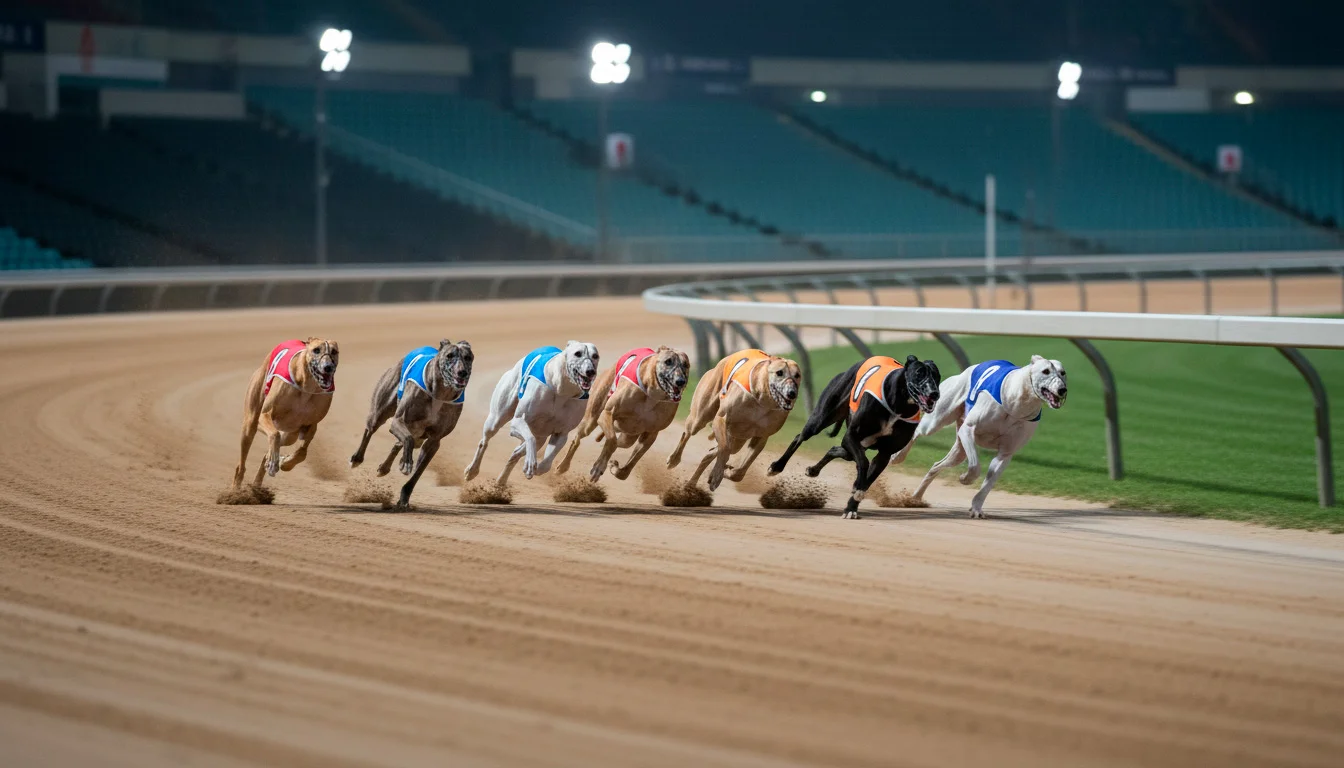
The Steel City Cup is the race that puts Sheffield on the national greyhound racing map. Every track has its regular meetings, its bread-and-butter graded races that keep the schedule ticking over. But only a handful of venues in Britain host a competition with genuine prestige — one that attracts entries from beyond the local circuit and produces an atmosphere that regular punters talk about for months afterwards. At Owlerton, that competition is the Steel City Cup.
Named after Sheffield’s defining industry, the Cup has been a fixture of the racing calendar for more than fifty years. It is run over 500 metres, the standard distance at Owlerton, and it carries Category One status under the GBGB’s classification system — the highest tier of greyhound competition in Britain outside the sport’s absolute flagship events. For connections — owners, trainers and breeders — winning the Steel City Cup is a career highlight. For punters, it is the night when Sheffield racing operates at its peak intensity.
Origin, Format and Category Status
The Steel City Cup was first run in 1970, a period when British greyhound racing was still a major spectator sport and stadiums competed fiercely to establish signature events that would draw crowds and media attention. The choice of name was deliberate and local — Sheffield was Steel City before it was anything else, and attaching that identity to the stadium’s premier race gave it an immediate cultural weight that a generic title would not have carried.
The competition is run over 500 metres at Owlerton, which means it takes place over the track’s most commonly raced standard distance — roughly one full circuit plus a short additional stretch. This distance tests both speed and stamina, requiring dogs that can break sharply from the traps, hold their position through four bends, and sustain their effort down the finishing straight. It is not a sprinter’s race and it is not a stayer’s race. It is a race for the complete greyhound.
Under the GBGB’s classification system, the Steel City Cup holds Category One status. The GBGB categorises open races on a scale that reflects prize money, prestige and the quality of entries they attract. Category One is the top tier, reserved for competitions that meet strict criteria regarding prize fund, field quality and historical significance. Holding Category One status means the Steel City Cup sits alongside some of the most respected greyhound races in Britain, and it ensures that the competition draws entries from kennels across the country rather than relying solely on Sheffield-based dogs.
The format follows the standard pattern for major greyhound competitions: a series of qualifying heats staged over several weeks, narrowing the field down to six finalists who contest the final on a designated evening. The heats serve a dual purpose — they give connections a chance to assess the competition, and they give the Owlerton audience a sustained period of high-quality racing that builds anticipation for the final itself. The qualifying rounds also generate significant betting interest, because form from the heats feeds directly into the market for the final.
Prize Money and What It Means for Connections
The prize fund for the Steel City Cup final reached £11,500 in 2025, a figure that reflects both the competition’s Category One status and the financial realities of greyhound racing in Britain. To place that number in context, greyhound prize money operates on a fundamentally different scale to horse racing. The English Greyhound Derby, the sport’s most prestigious event, offered £175,000 to the winner in 2025. The Steel City Cup’s prize fund is a fraction of that, but within the regional and national hierarchy of greyhound competitions, it represents a meaningful payday for connections.
For trainers, the prize money is important but it is not the whole story. Winning a Category One race enhances the reputation of a kennel in ways that extend well beyond a single night’s earnings. It attracts owners, because owners want their dogs trained by someone with a proven record at the highest level. It attracts better-quality dogs, because breeders and vendors know that a kennel with Category One wins has the expertise to campaign top-class animals. The Steel City Cup winner’s trainer gets a financial reward on the night, but the long-term benefit to the business can be considerably greater.
For owners, a Steel City Cup victory validates both the investment in the dog and the decision to campaign it at Sheffield. Greyhound ownership is not typically a route to profit — the costs of purchase, training, kennelling, veterinary care and entry fees usually outstrip the prize money a dog earns over its career. What ownership provides is participation in the sport, and winning a major competition is the ultimate expression of that participation. The connections of the winner on Steel City Cup final night are not just collecting a cheque; they are collecting a memory that defines their involvement in greyhound racing.
The Steel City Cup Final Night Experience
The atmosphere on Steel City Cup final night is unlike anything else on the Owlerton calendar. Regular meetings at Sheffield are pleasant enough — there is a rhythm to them, a familiarity that the track’s regulars find comfortable. But the Cup final transforms the stadium. The restaurant fills early. The trackside bars are busy. There is a buzz in the building that comes from having a single, decisive race at the centre of the evening’s card, with everything else serving as a prelude.
Andrew Mascarenhas, Owlerton’s racing manager, described the energy around a recent final by noting that the restaurant was fully booked and visiting connections were thoroughly engaged throughout the evening. The competition regularly attracts entries from kennels in the north-east and other regions, and their travelling supporters add a layer of partisan enthusiasm that midweek BAGS meetings simply cannot replicate. There is needle in the crowd — friendly, but real — and it lifts the occasion beyond the ordinary.
For first-time visitors to Owlerton, a Steel City Cup final is arguably the best possible introduction to the stadium. The quality of the racing is higher than a standard card, the hospitality is running at full capacity, and the evening has a narrative structure — heats, supporting races, the final itself — that makes the experience accessible even to people who have never studied a greyhound racecard. The Cup has become, in effect, Owlerton’s shop window: the night when the stadium presents itself at its best and makes the case for greyhound racing as a spectator sport worth caring about.
Recent Winners and Standout Performances
The 2025 Steel City Cup was won by Romeo Steel, a result that carried a certain poetic neatness — a dog with “Steel” in its name taking the Steel City Cup at Sheffield. Romeo Steel’s victory confirmed the trend of recent editions attracting genuinely high-quality entries, with the final field typically comprising dogs that have proven themselves at Grade A level or higher across multiple GBGB tracks.
What distinguishes standout performances in the Steel City Cup from routine wins in graded racing is the quality of the opposition. In a standard A1 race at Owlerton, the best dog in the field might be significantly superior to the rest. In a Category One final, all six runners have earned their place through the heats, and the margins between them are often razor-thin. A winning time that would be unremarkable in a weak graded race becomes genuinely impressive when set against the pressure of a competitive final, where crowding on the bends and pace pressure from the gun are both more intense than usual.
Historical winners of the Steel City Cup read like a roll call of greyhounds that defined their eras at Sheffield and beyond. Some went on to compete in national competitions; others were specialists whose peak performances happened to coincide with their appearance at Owlerton. For form students, looking back at previous Cup winners and examining their subsequent careers provides insight into the level of ability the competition demands — and, by extension, the level of ability that 500-metre racing at Sheffield can produce when the occasion calls for it.