UK Greyhound Racing Industry in Numbers
Best Greyhound Betting Sites – Bet on Greyhounds in 2026
Loading...
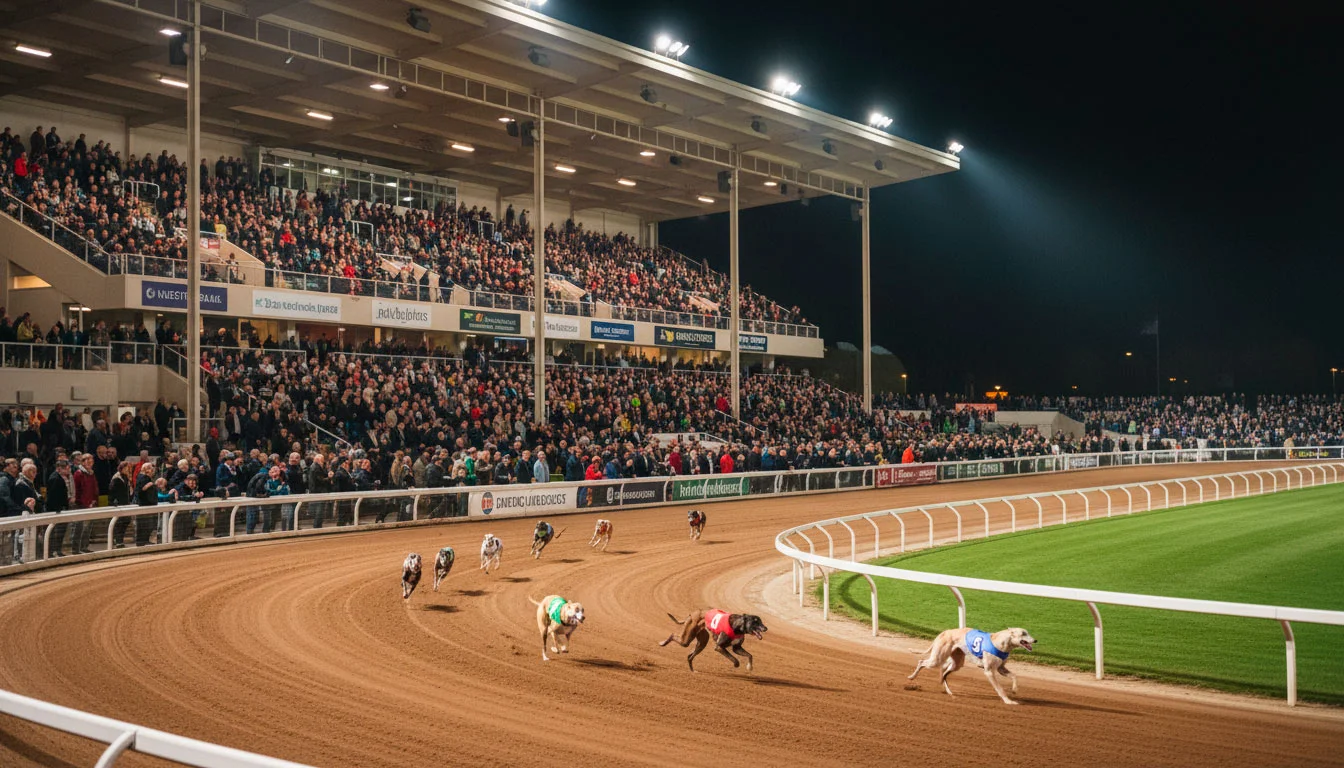
The UK greyhound racing industry is larger, more complex and more economically significant than most people outside the sport realise. It generates hundreds of millions of pounds in economic activity, employs thousands of people, and operates within one of the world’s biggest gambling markets. Yet it remains one of the least understood sectors of British sport — overshadowed by football and horse racing in media coverage, and often reduced to simplistic narratives about welfare or decline. The numbers tell a different story.
What follows is a data-driven overview of the industry as it stands in 2025, drawn from official sources including the GBGB, the Gambling Commission, the BGRF and parliamentary records. The picture that emerges is of a sport that is neither booming nor collapsing, but operating in a complex and rapidly evolving environment where the economics, the regulation and the public perception are all in flux.
The £164 Million Sport: Economic Contribution and Employment
The headline economic figure for UK greyhound racing is £164 million per year in direct contribution to the British economy. That number, cited by GBGB Commercial Director Mark Moisley, encompasses the sport’s output across track operations, hospitality, media rights, prize money and the supply chain that supports racing — from feed suppliers and veterinary practices to broadcast infrastructure and betting technology. Moisley has described greyhound racing as one of the top ten spectator sports in the country by attendance, placing it alongside far more heavily funded and publicised disciplines.
Employment in the sector accounts for approximately 5,400 jobs. These span a wide range of roles: licensed trainers and their kennel staff, stadium employees in racing, hospitality and administration, veterinary professionals, racing officials, and the media and broadcast personnel who deliver live coverage to the betting market. The employment figure does not include the indirect jobs supported by the sport’s supply chain, which would push the total higher — but even on the direct count, greyhound racing supports a workforce comparable in size to many mid-tier professional sports in Britain.
The economic contribution is not evenly distributed. It concentrates around the 18 GBGB-licensed stadiums and the communities that surround them, meaning the impact is felt locally as well as nationally. For a city like Sheffield, Owlerton Stadium is not just a racing venue — it is an employer, a hospitality destination, and a generator of economic activity that ripples through the local economy in ways that aggregate statistics do not fully capture.
18 Tracks and Counting: The GBGB Stadium Map
As of January 2025, there are 18 GBGB-licensed stadiums operating in Britain. This number has been declining gradually over the past two decades — the UK once had dozens of licensed tracks — but the rate of closure has slowed considerably, and the remaining venues are generally well-established operations with sustainable business models built around BAGS contracts, hospitality income and, increasingly, digital betting revenue.
The geographic distribution of the 18 tracks favours England heavily. Scotland no longer has any active GBGB stadiums following the closure of its last track in 2025. Wales has one licensed venue, though its future is uncertain given the legislative moves towards prohibition. The English tracks stretch from the north — with Sheffield, Sunderland and Newcastle — through the Midlands — Monmore, Nottingham, Perry Barr — to the southern cluster around London — Romford, Crayford, Wimbledon.
The registered sector supporting these stadiums comprises approximately 500 licensed trainers, around 3,000 kennel workers and roughly 700 stadium employees. There are an estimated 15,000 greyhound owners in Britain, and approximately 6,000 new greyhounds are registered for racing each year. These numbers describe an industry with a substantial participant base — far from the niche pastime that media coverage sometimes implies.
Greyhound Racing Within the £16.8 Billion UK Gambling Market
Greyhound racing operates within the broader UK gambling market, which generated total gross gambling yield of £16.8 billion in the financial year ending March 2025 — a 7.3 per cent increase year on year. The online sector, covering remote casino, betting and bingo, accounted for £7.8 billion of that total, representing 46 per cent of the market. These figures provide the context within which greyhound racing’s economic contribution should be understood: the sport is a significant but relatively small component of a very large industry.
Greyhound betting generates revenue for bookmakers through both retail (in-shop) and digital channels. The BAGS system ensures that live greyhound racing is available in betting shops throughout the day, providing a continuous stream of betting events that fills the gaps between horse racing and other scheduled sports. For bookmakers, greyhound racing is a reliable content product — it runs year-round, produces multiple races per meeting, and attracts a loyal base of regular bettors whose wagering patterns are predictable enough to manage profitably.
The proportion of overall UK gambling revenue attributable specifically to greyhound racing is not broken out separately in the Gambling Commission’s published statistics, which makes precise calculation difficult. However, the sport’s economic contribution of £164 million and the BGRF’s reported levy collections provide reference points that suggest greyhound betting represents a small but meaningful fraction of the total retail and online sports betting market.
How the Sport Is Funded: Voluntary Levy and BGRF
The financial architecture of UK greyhound racing differs fundamentally from horse racing in one critical respect: there is no statutory levy on bookmaker profits from greyhound betting. Horse racing benefits from the Horserace Betting Levy, a compulsory charge on bookmaker revenue that generates substantial funding for prize money, integrity and welfare. Greyhound racing relies instead on a voluntary arrangement administered by the BGRF — the British Greyhound Racing Fund.
Under this voluntary system, participating bookmakers contribute 0.6 per cent of their turnover on greyhound bets to the BGRF. In the 2024-25 financial year, this arrangement collected £6.75 million. The previous year’s figure was £7.3 million, representing a decline that reflects both shifts in bookmaker participation and changes in betting volumes. The BGRF reports that the voluntary system captures between 90 and 95 per cent of the revenue attributable to UK greyhound betting, based on Gambling Commission data — a high but not complete coverage rate.
The funds collected by the BGRF are distributed to tracks in the form of prize money supplements, media rights payments and welfare contributions. This funding is essential to the economics of individual stadiums, because it supplements the income they receive directly from their BAGS contracts and gate receipts. Without the BGRF contribution, prize money at many tracks would be insufficient to attract competitive fields, which would in turn reduce the appeal of the racing product to bookmakers and punters — a downward spiral that the voluntary levy is designed to prevent.
The campaign for a statutory levy on greyhound betting — mirroring the horse racing model — has been a persistent theme in industry lobbying. The GBGB has formally called on the UK government to introduce such a levy, arguing that the voluntary system is vulnerable to bookmaker withdrawal and does not capture the full value that the industry generates for the betting sector. A parliamentary petition supporting the statutory levy gathered 4,753 signatures, short of the 10,000 threshold required for a government response. The debate continues, and its outcome will significantly influence the sport’s financial trajectory in the years ahead.